

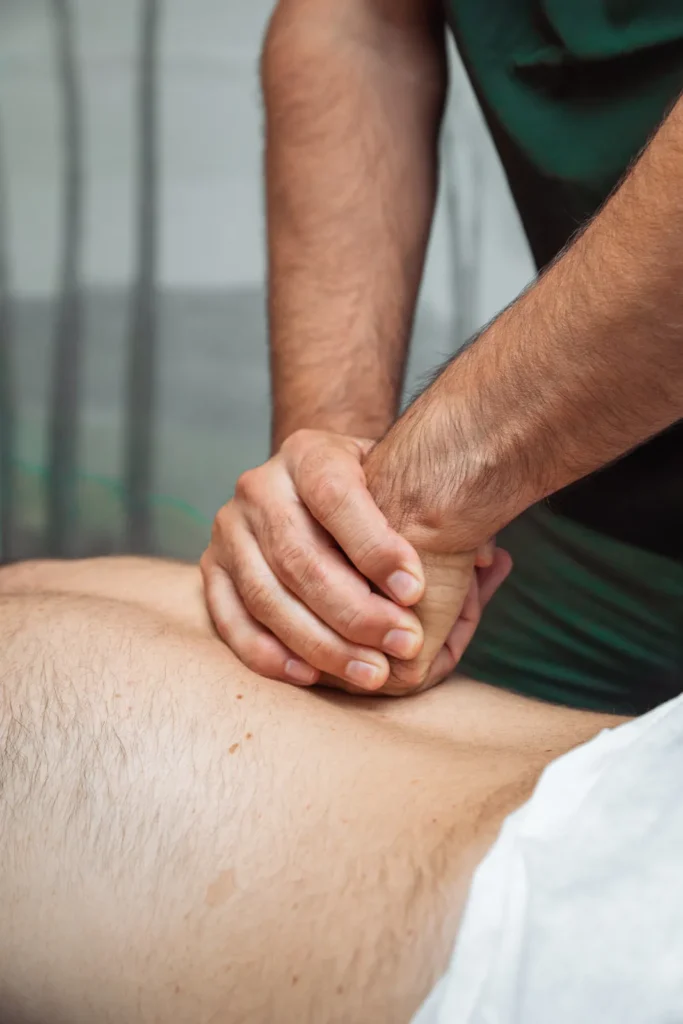
From October to spring, the Axarquía lives through the avocado season, and in summer and early autumn, the mango season. Many people from Vélez-Málaga, Algarrobo, Benamargosa, Comares or Almayate spend whole days up ladders, with their arms above their heads, carrying crates and walking across sloping farmland. At augusto, centro de osteopatía y wellness, our Algarrobo-Costa centre is right in the heart of this area, and every season we see how the backs, shoulders and hands of those who work in the fields get overloaded.
Which areas get most overloaded during the season
- Shoulders and neck: hours cutting fruit with arms raised.
- Lower back: bending down for crates and lifting them again and again.
- Hands and forearms: shears, poles and constant gripping.
- Knees and ankles: terraces, slopes and uneven ground.
Just like for those who work on their feet in hospitality, the problem isn't one particular movement, but repeating it for hours and weeks.
Practical guidelines for the working day
- Before you start, five minutes of mobility: shoulder circles, trunk rotations and hip swings.
- Lift crates with your legs, keeping them close to your body and without twisting your trunk under the weight.
- Place the ladder close to the fruit so you don't overreach.
- Switch your cutting hand when you can, and open and close your hands at every break.
- Drink water often: on the Axarquía farms the sun is strong even in November.
- When you finish, stretch your chest, shoulders, forearms and the backs of your legs.
Strength outside the season
The best time to prepare your body is before the season starts. Two short strength sessions a week, working on back, glutes, shoulders and grip, make all the difference. In our personal training, individually or in groups of up to four, and with MAM, Augusto Movement Method, we teach you to move better at work.
When osteopathy or quiromassage fits in
If your shoulders feel overloaded, your lower back stiff when you get up or your hands tired after several weeks of the season, a session of osteopathy in Algarrobo-Costa helps restore mobility to the whole: shoulder, spine and hips. A quiromassage release session every two or three weeks keeps the muscles loose during the season. For crews and farming companies we have a programme of corporate wellbeing.
An osteopathy or quiromassage session costs €90 (€80 for members) and, with a pack, from €60; you can pay by cash or card. If you're coming from another village, our guide to Algarrobo and the Axarquía explains how to get here and book.
If discomfort doesn't ease or appears suddenly when lifting weight, see a healthcare professional. We work on your body's wellbeing and balance so you reach the end of the season with energy.
Book on WhatsApp at 621 01 59 23. We work by appointment in Málaga and Algarrobo.
Frequently asked questions
How often should I have quiromassage during the avocado season?
Every two or three weeks if you work full days in the fields; once a month if you only go a few days a week.
Which exercises prepare the back for farm work?
Glute and back strength (bridges, rows and light deadlifts), shoulder mobility and grip work, twice a week.
Where is your centre in the Axarquía?
In Algarrobo-Costa, at Avenida Andalucía, bloque Mar del Plata s/n, local bajo. We work by appointment: call 671 47 16 25 or message us on WhatsApp at 621 01 59 23.
Reviewed by Octavio Augusto, osteopath and director of augusto, centro de osteopatía y wellness. We are a centre of natural and manual techniques focused on wellbeing; we do not carry out any healthcare activity.
Keep reading
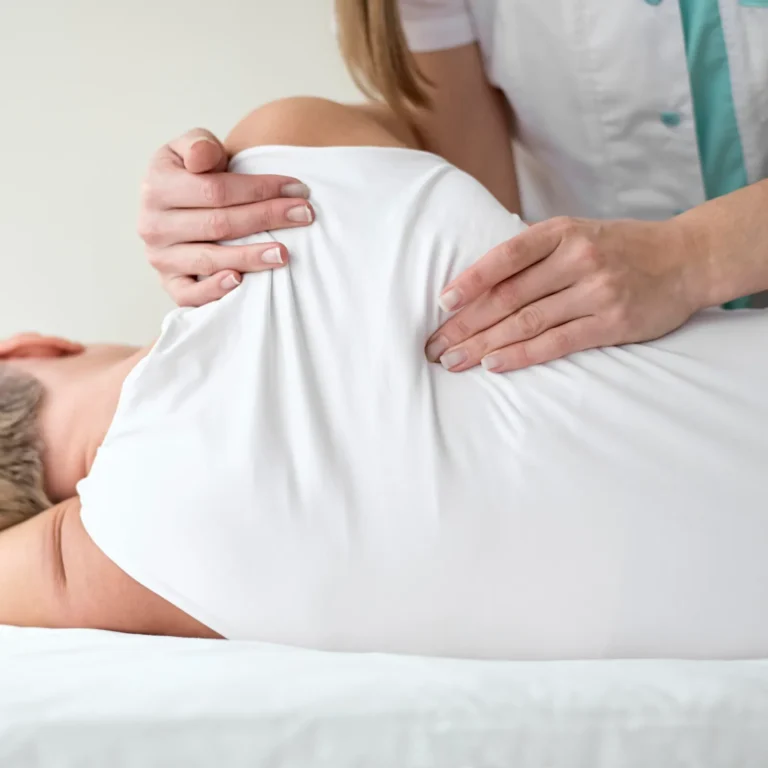 Working on your feet in hospitality: how to look after your feet, legs and backTen-hour days standing in bars, restaurants and hotels in Málaga: what you can do for your feet, legs and back.Read article →
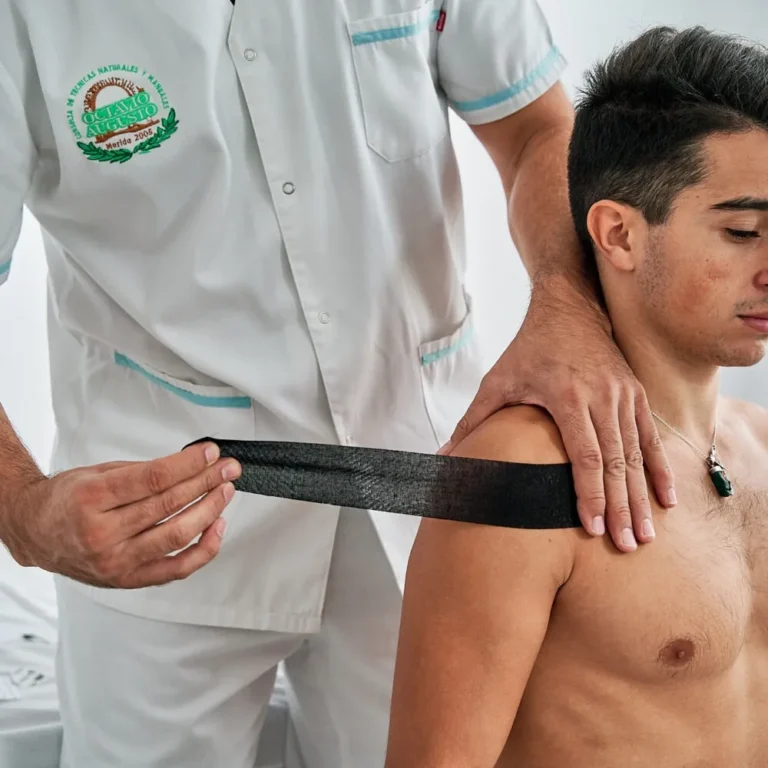 Osteopathy and quiromassage in Algarrobo and the Axarquía: a practical guideWhere we are in Algarrobo-Costa, what we do, how to book and why people come from all over the Axarquía.Read article →
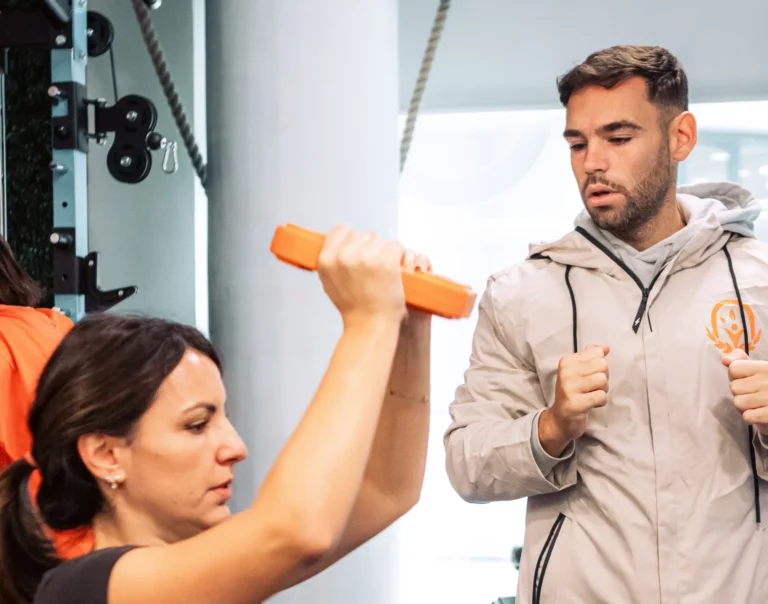 Strength training after 40: why and how to startIt's not too late: strength can be trained at any age, and after 40 it's what changes how you feel the most.Read article →
